Modular vs. Monolithic Software: Why Scalability Wins
Many factory managers hesitate to upgrade their technology because they picture a massive, expensive overhaul that disrupts the entire plant for months. Buying a massive all-in-one system often forces you to pay for dozens of features you will never touch.
A modular manufacturing system offers a much smarter path forward. Instead of ripping out everything at once and forcing your team to learn a completely foreign interface overnight, you add specific tools exactly when you need them.
Table of Contents
- The Hidden Costs of Monolithic Systems
- Solving One Bottleneck at a Time
- Scaling Without the Growing Pains
- Taking Control of Your Technology Budget
The Hidden Costs of Monolithic Systems
The traditional approach to factory software usually involves a monolithic structure. You buy a giant package, hoping it fixes all your problems at once. In reality, this strategy creates chaos on the production floor, slowing down output while operators struggle to understand the new screens and processes.
The IT department spends weeks trying to force the new software to talk to your existing legacy machines. You end up adapting your perfectly good factory processes to fit the rigid rules of the new software, rather than the other way around. This causes frustration across the shop floor and quickly depletes your capital budget.
Solving One Bottleneck at a Time
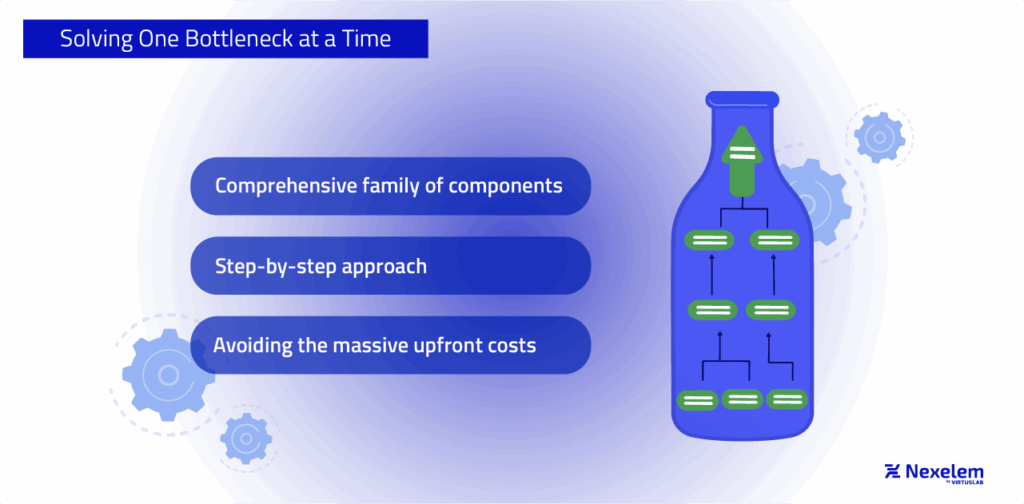
Nexelem takes a completely different route. We designed our software as a comprehensive family of components tailored to fit your specific floor operations.
If your current biggest bottleneck is scheduling, you start by fixing that exact problem with advanced planning and scheduling software. You get your schedules in order, train your planners thoroughly, and see immediate results in your delivery times. Later, when you want to connect your machines for real-time data or to manage your warehouse more effectively, you simply plug in new modules.
This step-by-step approach defines the true meaning of modular manufacturing. You build your system piece by piece around your actual operational needs.
You avoid the massive upfront costs and steep learning curves associated with monolithic software deployments. Your operators learn one new tool at a time, making the transition smooth and manageable for everyone involved. Resistance to change drops dramatically when the new software actually solves an immediate headache for the user.
Targeted Problem-Solving Without Disruption
If your materials are constantly arriving late or you hold too much inventory, you might add an MRP system to your existing setup. You fix your purchasing and inventory flow without disrupting the scheduling software you already installed.
This targeted problem-solving keeps your operations stable while you upgrade your capabilities.
Scaling Without the Growing Pains
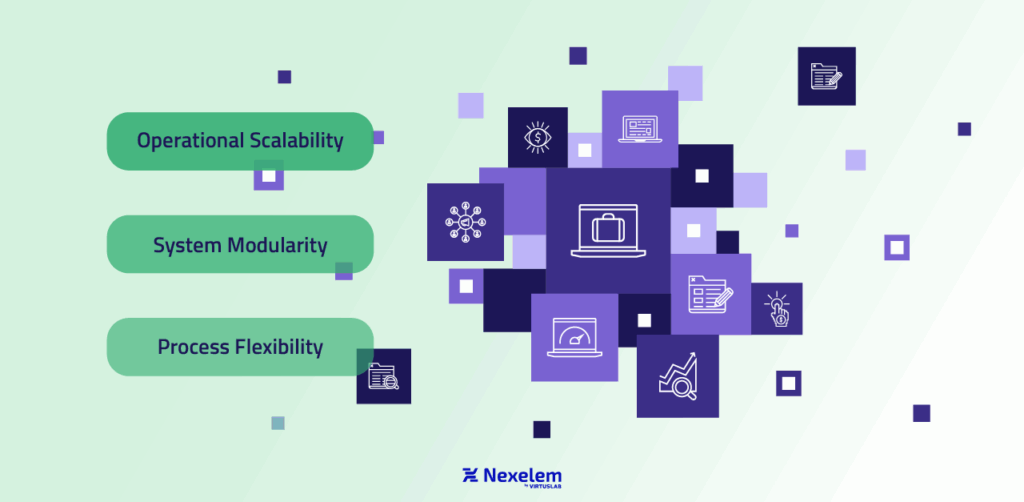
Growing your operations requires serious flexibility from your software vendor. With modular manufacturing software, your technology scales alongside your business at a pace that makes sense for your cash flow. You integrate new modules with your existing ERP, keeping your data flowing without skipping a beat. Every factory runs a unique modular manufacturing process, and your software should reflect that reality on the ground. You might run high-volume mass production on one line and custom, low-volume orders on another.
A modular setup lets you apply the right digital tools to specific areas of your plant without forcing a single solution on your team.
Smooth Upgrades and Maintenance
Maintaining a large monolithic system also requires constant attention and expensive consultants every time you need to update a minor feature. Modular systems bypass this headache completely.
Upgrading one specific component does not break the rest of your factory’s digital ecosystem. You update your warehouse tools without taking your production scheduling offline. This keeps your factory running smoothly and reduces the hidden long-term costs that usually drag down large IT projects as you move toward Industry 4.0.
Taking Control of Your Technology Budget
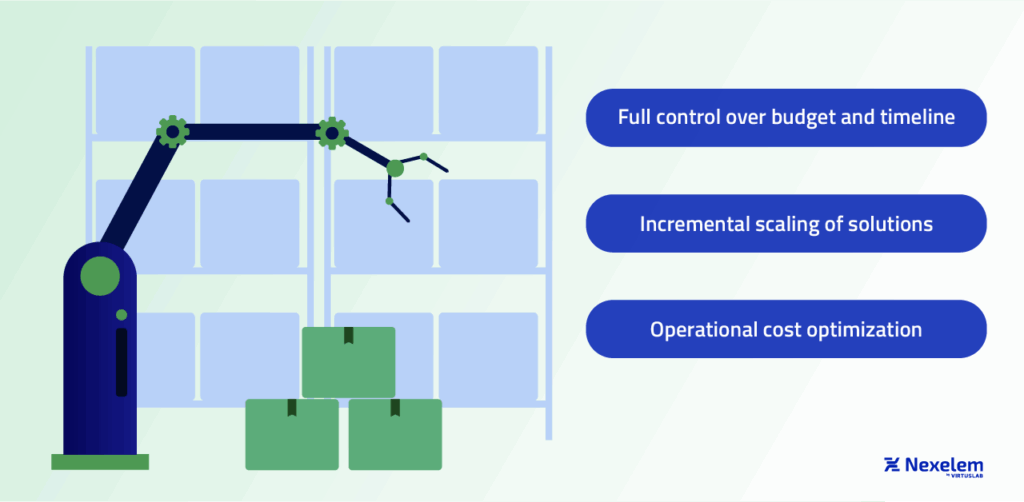
You stay in complete control of your technology budget and your implementation timeline. You start small, solve your most urgent problems first, and expand your system as your operations mature and your team gets comfortable with the digital tools. You only pay for the features that actually provide value to your daily operations, keeping your overhead low.
Ready to build your system around your actual operations? Start at Nexelem.