Production Planning Integrated with SAP: APS and MES at Sanok Rubber Company
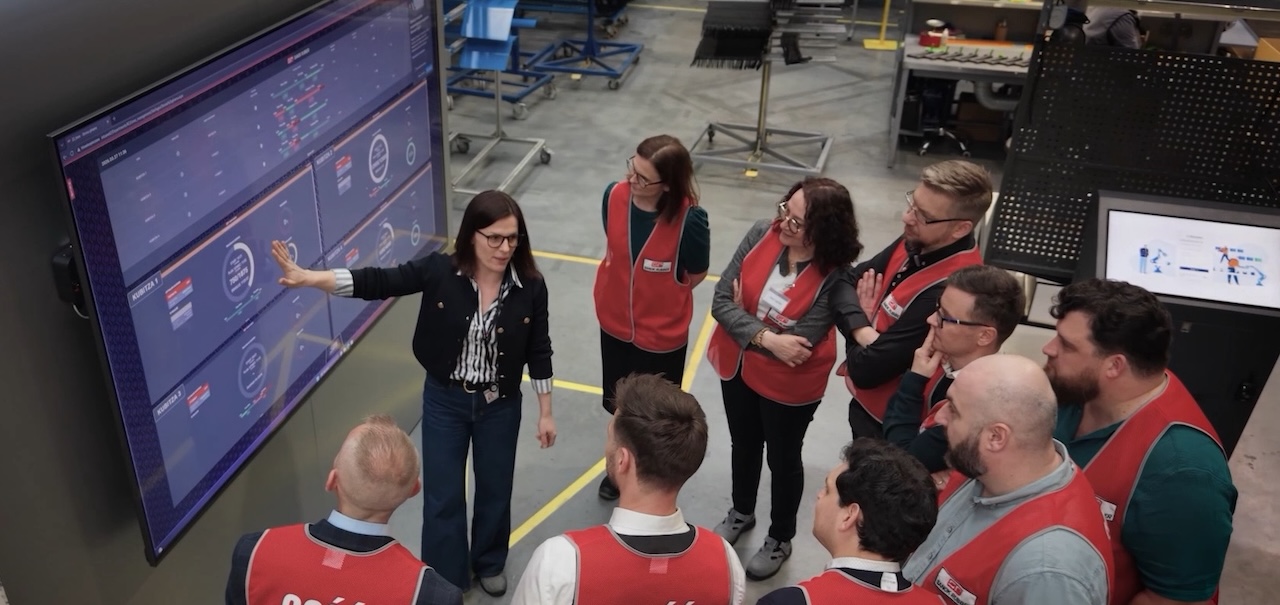
Sanok Rubber Company makes rubber components for the automotive and agricultural machinery industries across Central Europe. Its planners used to build the production plan across several separate Excel spreadsheets, copying data by hand from SAP and from paper records kept on the shop floor, so a finished schedule could already be out of date by the time it was released. VirtusLab implemented Nexelem APS and MES integrated with SAP, and the planner now works from a single schedule that updates continuously as orders actually progress.
Contents:
The company and the scale of the challenge
- Company: Sanok Rubber Company, a manufacturer of rubber components for the automotive and agricultural machinery industries.
- Scale of the plant in scope: 340 workstations, 1,200 part numbers, 2,000 routing operations, 5,000 planning tasks and 20,000 technological dependencies.
- Scope: Nexelem APS and Nexelem MES integrated with SAP, plus a network of 120 production reporting stations on the shop floor.
- Data sources before the project: SAP and paper production records.
- Problem: the plan was assembled by hand across several spreadsheets and was out of date before it reached the shop floor.
- Solution: APS pulling planning data directly from SAP and MES reporting progress from the shop floor in real time, combined into one schedule that refreshes on a regular cycle.
The Sanok Rubber Company plant runs hundreds of workstations and thousands of part numbers. At that scale the number of possible operation sequences, and the dependencies between them, grows faster than any spreadsheet can keep consistent. That combinatorial load, rather than a wish to “go digital”, was the real reason for the project.
The problem
Before APS went live, planners worked across several unsynchronised Excel files at once. Data had to be copied by hand from SAP (routings, BOMs, stock levels, sales orders) and from paper production records, because some information on order progress existed nowhere else. Keeping the files consistent took so much time that the response to a change in demand or a sudden swing in orders always came a step too late. A plan could be finished and already out of date at the same moment.
Behind that general picture sat specific questions that planners and management could not answer quickly:
- Is the plant producing the items that are actually needed most right now, or the ones that happened to be easier to schedule?
- Which production resources (machines, tools, work centres) are available right now, and does their load allow today’s plan to be completed?
- What skills do the people on the current shift hold, and do they match the operations scheduled for today?
- Does the plan reflect the real constraints of rubber processing: changeovers and their duration, minimum batch sizes, availability of moulds and tooling?
- Is communication between planning and production fast enough for the schedule to respond to deviations during the day, rather than the next morning?
The size of the data alone shows why Excel had reached its limit: 1,200 part numbers, 2,000 routing operations, 5,000 planning tasks and 20,000 technological dependencies between them, spread across 340 workstations.
When no spreadsheet can keep that many links consistent every time a single order changes, even the most experienced production planning specialists need a system to do it.
The solution
VirtusLab implemented Nexelem APS integrated with SAP as the source of planning data, and Nexelem MES as the layer that collects production progress directly from the shop floor. From SAP the system pulls planning data (routings, BOMs, production versions), stock levels, planned deliveries, lead times and material reservations for trial runs, sales orders together with safety stocks and orders from other plants, as well as data specific to rubber processing: alternative machines, simultaneous production in moulds, minimum batch sizes per workstation, machines running non-stop, finished-goods priorities, extrusion groups, and the requirements for and availability of production resources and tools (PRT).
This data passes through an intermediate layer, which can be either Nexelem’s own scheduling algorithm or an external solver connected to Nexelem. In this project the client chose the external solver, which Nexelem’s open architecture supports.
In the other direction, Nexelem supplies data that SAP does not hold and does not need to: MES production batches with their current status, a staff calendar with primary skills and planned detailed skills, a machine calendar with downtime, and new or modified production batches created during the day.


On that basis the planner works from a Gantt chart view that shows the current production plan and any gaps created during planning, built on a tree of dependencies between operations rather than flat orders. Scheduling rules keep changeovers to a minimum and extend runs wherever the process allows. The system tracks progress and anomalies on the shop floor in real time, compares the plan with actual output and re-optimises the production queue as it goes. The planner will also be able to run a simulation of an alternative version of the plan and compare it with the current one on hard KPIs before approving a change (what-if analysis is part of the target scope of the implementation).
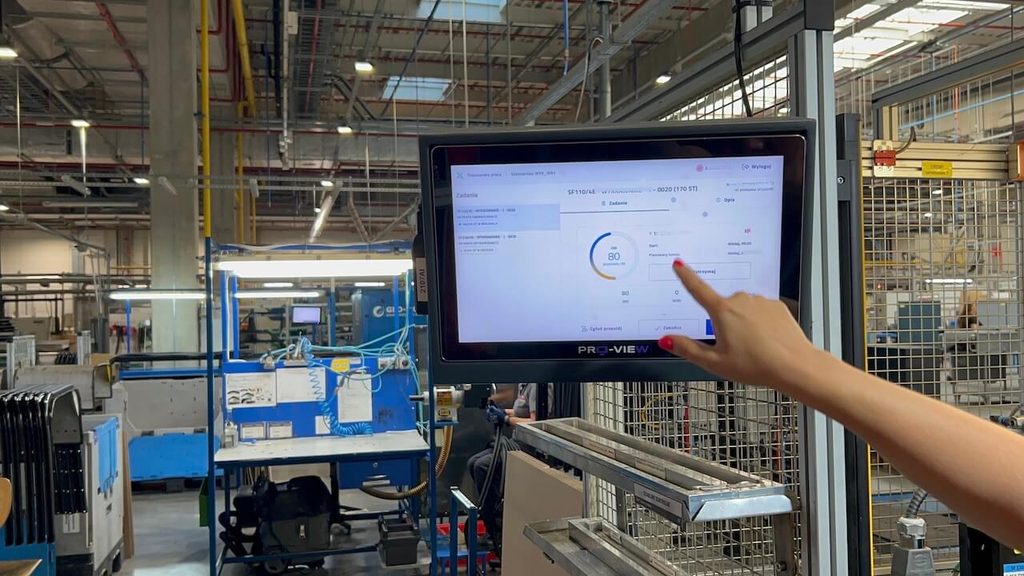
On the shop floor, data flows back into the system through a network of 120 production reporting stations. Operators see their task list there and report progress as often as each workstation requires, and the system shows them how they are tracking against their target, so a question raised during a gemba walk can be answered without calling the shift leader.
“Thanks to the new planning system, each employee knows exactly what to work on and what their priorities are for the day, and the reporting system removes unnecessary paperwork and makes work more comfortable.” — Magdalena Bochnak, Production Department Manager, Final Operations, Sanok Rubber Company
The results
Sanok Rubber Company’s production plan now refreshes on a regular cycle based on actual order progress, not only on assumptions made several days earlier. These are the effects observed by the client and the implementation team.

- Planning moved from whole orders down to individual operations, updated online rather than once a day.
- The plan takes stock levels and material requirements at each workstation into account, so the planner no longer has to check them manually in SAP.
- The planner enters and validates changes to the plan in one tool, instead of negotiating priorities with the production shift over the phone.
- Planners, supervisors, operators, logistics and maintenance all work to the same priorities, because they all look at the same schedule.
- The system flags risks caused by bottlenecks up to 12 months ahead, before they turn into delays.
- Yield, material consumption and operation times are reported directly from 120 stations on the shop floor, so the data reflects what actually happened in production, not what someone wrote down from memory at the end of the shift.
If you want to see how production planning integrated with an ERP system such as SAP works in practice, with a large number of part numbers and technological dependencies, read how MRP and production planning fit together, or book a demo of Nexelem or a free consultation using the contact form below.
Contact form
"*" indicates required fields