The Future Factory on SuperAI 2026: Manufacturing AI Moves from Roadmaps to Running Systems
The conference ran on June 10–11 at Marina Bay Sands, drawing over 10,000 attendees and 1,500 AI companies from 150 countries. Six pillars shaped the program: frontier models, AI infrastructure, robotics and embodied AI, biotech, enterprise AI, and safety and governance. Manufacturing sat across several of them, sometimes explicitly, sometimes as a recurring undercurrent.
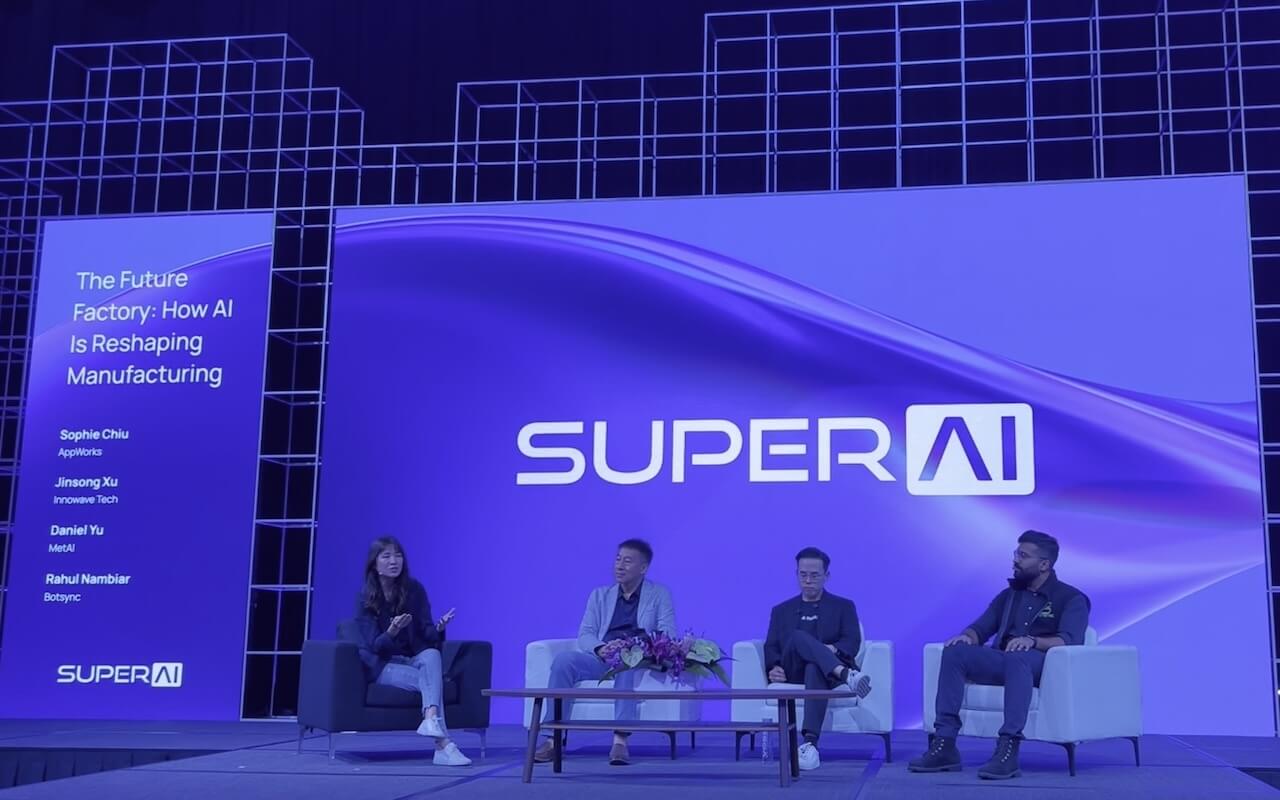
I came back from SuperAI 2026 in Singapore with a different feeling than last year. Less excitement about what AI will eventually do. More curiosity about what it is already doing.
What struck me most was a simple observation: the companies talking about manufacturing AI in 2026 are not the same companies that were talking about it in 2025. Last year, it was concepts and roadmaps, things that might matter in five years. This year, presenters came with prototypes and products that already run on factory floors.
The gap between “this is possible” and “this is shipping” closed faster than most people expected.
Table of contents:
- The biggest shift: from concepts to products
- Digital twins finally get a brain
- The AI agent that might know your floor better than your production manager
- Humanoid robots: a product, not a promise
- Appendix: The view from Birmingham: what manufacturers actually struggle with
The biggest shift: from concepts to products
A year ago, manufacturing AI sessions at conferences sounded like ambitious planning. This year, they sounded like operational reporting.
The change was not just in the vocabulary. It showed who was presenting. In 2025, the voices were often those of researchers and strategists. In 2026, engineers and operations leads showed dashboards, deployment timelines, and actual metrics. The level of specificity went up sharply.
Deloitte’s Resilient By Design: The Agentic Supply Chain report, published in early 2026, describes agentic AI as ready to conduct always-on monitoring and autonomous decision-making at a scale beyond human limits — and notes that adoption is already accelerating. A separate IBM study found that more than half of supply chain executives surveyed are already deploying AI agents to automate workflows. The mood at SuperAI 2026 matched this. Robotics, digital twins, and AI agents were no longer the most speculative conversations in the room. They were the most concrete ones.
For a manufacturing audience, this matters: the technology discussion has moved from “is this feasible?” to “how do we deploy and scale it?” Those are fundamentally different conversations, requiring different people in the room and different decisions.
Digital twins finally get a brain
The most significant manufacturing trend at SuperAI 2026 had nothing to do with robots. It was the combination of generative AI with digital twins to build virtual factories that actually simulate production.
The core idea is straightforward, but the implications are large. Instead of spending 12 months manually configuring a digital twin of your factory, a narrowly trained generative model can build that virtual AI factory in days. Once built, the simulation can begin within a week. The smart factory does not yet exist in metal and concrete; it exists in data flows, running production scenarios at speed.
That speed has one precondition: the data has to already be there, structured, and live. In practice, this means a Manufacturing Execution System (MES) collecting real-time production data from machines and operators, and an IIoT aggregation layer that manages storage intelligently — full resolution for recent data, lower resolution for older records, like in our in-house solution, keeping storage costs in check without losing the historical signal. Without this data foundation, the generative model has nothing meaningful to build from. With it, constructing a virtual factory becomes a matter of days rather than an engineering project measured in quarters.
Siemens demonstrated this concretely with Digital Twin Composer, launched at CES 2026. PepsiCo used it to convert several US manufacturing and warehouse facilities into high-fidelity 3D digital twins, including every machine, conveyor, pallet route, and operator path, with physics-level accuracy. AI agents then simulated, tested, and refined system changes inside that virtual environment. The result: PepsiCo identified up to 90% of potential issues before any physical modifications, achieved a 20% increase in throughput during initial deployment, and reduced capital expenditure by 10 to 15%.
NVIDIA’s Rev Lebaredian described the broader principle: “In an era where every physical object and process will have a digital twin, Siemens’ Digital Twin Composer establishes a digital thread that connects the silos of design, engineering, and operations.”
The digital twin is no longer a passive mirror of the factory. It is becoming a generative environment where decisions are validated before physical resources are committed.
For a plant director or production manager, the practical consequence is significant. Investment decisions, capacity changes, layout redesigns — these can now be validated virtually, at low cost, in a compressed timeline. The question shifts from “can we afford to experiment?” to “why would we not?”
This also reframes what capacity planning means. Instead of static models updated quarterly, the virtual factory becomes a living simulation that informs decisions continuously. The gap between planning and reality narrows not because people work harder, but because the model runs faster.
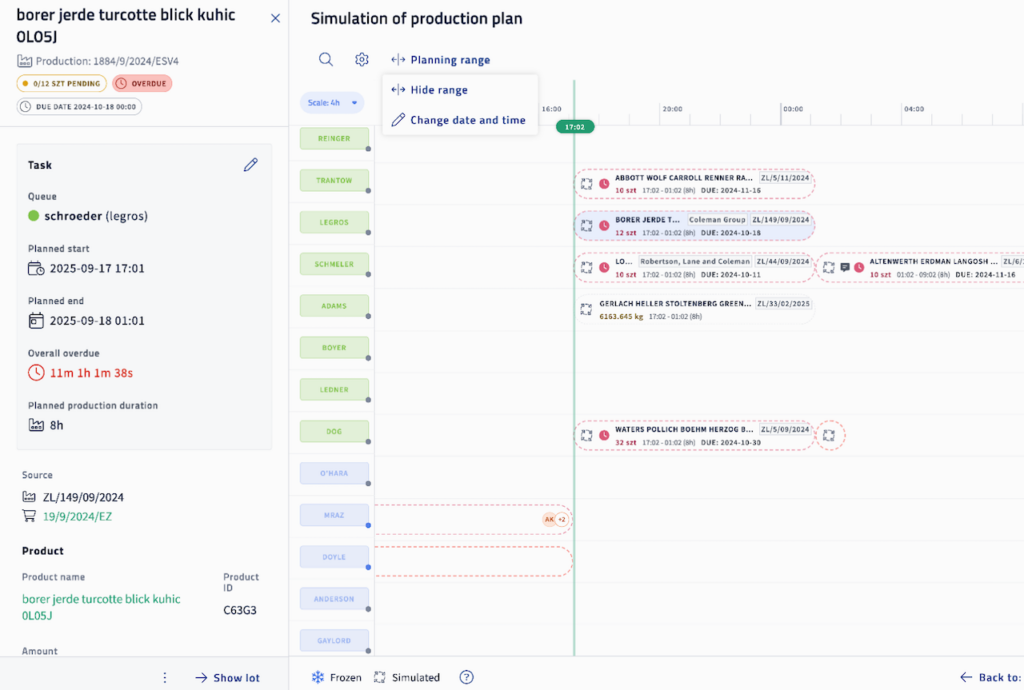
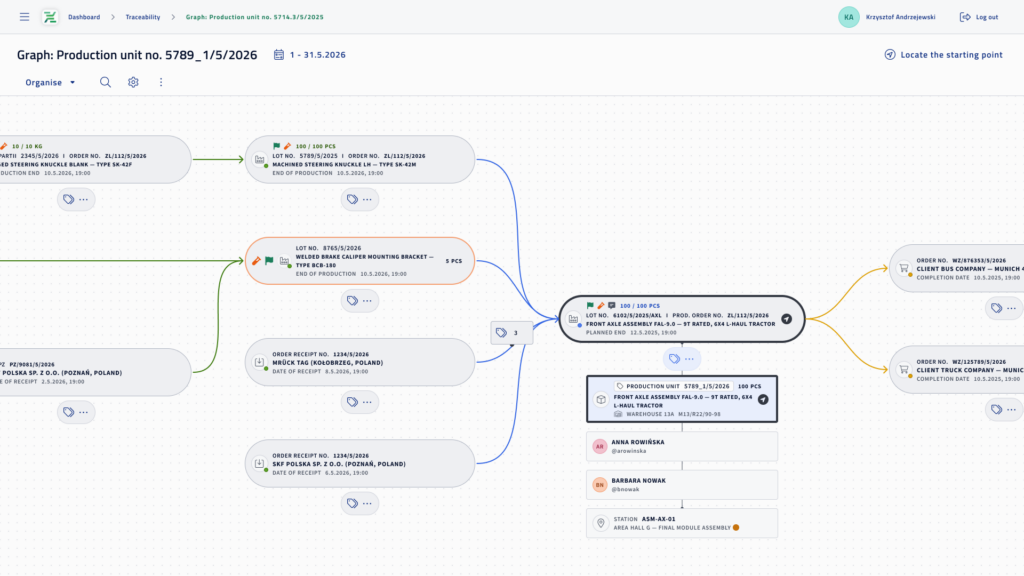
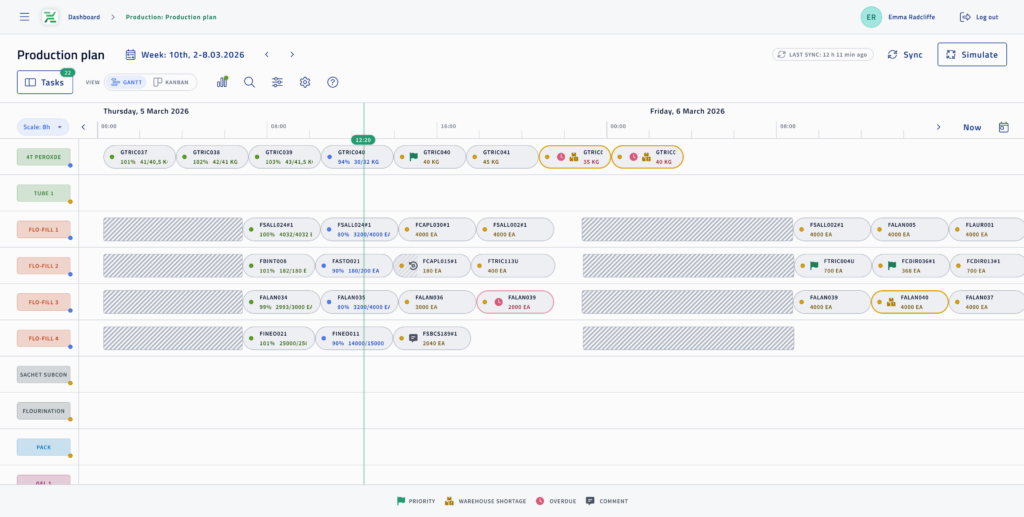
Nexelem MES and APS are structured for exactly this chain: MES captures execution data from the floor, the IIoT layer aggregates it at the right granularity, and APS uses that live picture to schedule production orders, allocate tasks to machines, and assign operators matched by their documented competencies. The architecture is already the right shape for a generative digital twin to sit on top of.
The AI agent that might know your floor better than your production manager
The second major theme at SuperAI 2026 was more conceptual, but it pointed at something that will matter enormously for manufacturing organizations: AI agents as a complement — and eventually in some cases a replacement — for the accumulated knowledge of experienced production managers.
This is not automation in the traditional sense. A production manager’s core value is cognitive: knowing the floor, understanding the smell of the shopfloor, knowing the constraints, knowing what to do when things go wrong. That knowledge lives in their experience, not in any system.
What is emerging is a shift from “knowledge in heads” to “context in systems.” An AI agent does not need to know everything in advance; it needs access to the right context: machine states, historical performance, current orders, and operator availability. Given that context, it can reason about what to do next.
So, the question is whether the role of the production manager in the era of AI and agentic factories would be an extension of HR. I see it here, but to me it’s clear that the best production managers are not only the most skilled and experienced engineers, but also crew connectors, like captains on a ship who don’t row or set sails themselves.
— The broader AI community calls this the shift from knowledge-based systems to context-driven agents. Applied to manufacturing, an agent does not need 15 years of floor experience to make useful production decisions. It needs good data, clear constraints, and the ability to act on them.
The underlying technology is maturing fast. Protocols like MCP (Model Context Protocol) are now enabling manufacturers to connect AI agents directly to MES and ERP systems without expensive custom integration work.
In concrete terms, this is the context a good APS system already holds: the current production schedule, machine and line availability, material constraints, and operator assignments matched by competence level. An AI agent that can read and act on this structured picture does not need to derive operational knowledge from scratch. It needs the right connection and a clear set of constraints to reason against.
For production managers, this is not necessarily a threat. It is a redistribution of what requires human judgment and what can be delegated. Experienced managers who understand this shift will likely use AI agents to multiply their effectiveness, freeing their attention for the decisions that genuinely require human judgment.
Humanoid robots: a product, not a promise
Humanoid robots were the headline at SuperAI 2025 when it comes to shipyards of the future. In 2026, they are still present at conferences, but they have moved from the main stage into the background. Not because progress has slowed, but because they are now products in production, not demos at a conference.
The numbers are concrete. Figure AI is now producing Figure 03 at one robot per hour at its BotQ factory, up from one per day just four months prior. Unitree shipped over 5,500 humanoid units in 2025, ranking first globally in shipments and targeting 20,000 units in 2026. Boston Dynamics’ electric Atlas is shipping to customers including Hyundai and DeepMind. Agility Robotics has active deployments at Toyota Canada under a Robot-as-a-Service model.
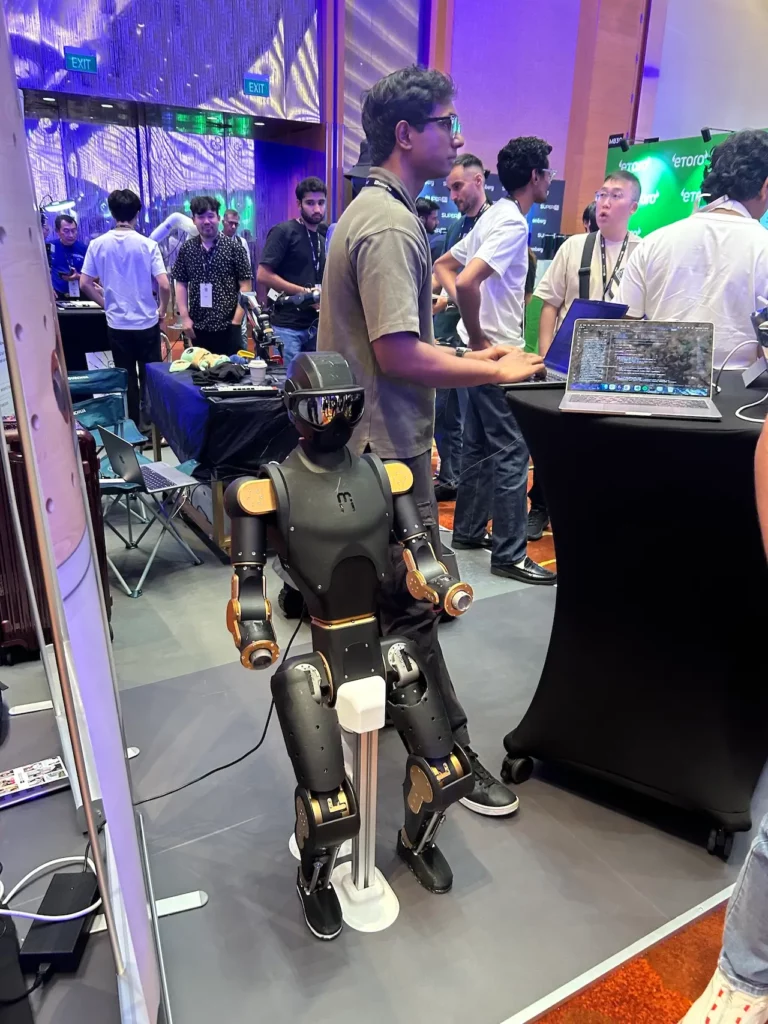
One exhibit stood out as a deliberate counterpoint to all of this: Asimov by Menlo Research. They had a physical robot on the floor — 120 cm, 35 kg, 25 actuators — but were candid that most of the demonstrated behaviors were still running in simulation rather than on the hardware. What made them interesting was not the robot itself but the principle behind it: Asimov is fully open-source, available as a DIY kit with a public bill of materials and an open GitHub repository. In a field dominated by closed, heavily funded platforms competing on proprietary hardware and training data, an open-source humanoid is a genuinely different bet. Whether that bet pays off at an industrial scale is an open question, but the concept is worth watching, particularly for research teams and manufacturers who want to experiment without committing to a vendor ecosystem.
The question in 2025 was “Will these work?” The question in 2026 is “for which tasks do they make economic sense, and at what scale?”
The answer emerging from deployments: structured, repetitive tasks in consistent environments. Welding, assembly, and parts handling where conditions are predictable. Not general-purpose robots roaming a factory, solving whatever comes up. This mirrors what Persona AI was demonstrating at SuperAI 2025, configuring robots for specific roles — Builder, Welder, Fabricator, Assembler — rather than one-size-fits-all capability. That framing has proven correct.
From a production management perspective, humanoid robots introduce an interesting complexity: they become resources to plan around, like any other piece of equipment, but with different performance profiles and different failure modes. The integration question, how robotic workers connect to production scheduling systems, is one that the industry is only beginning to address seriously.
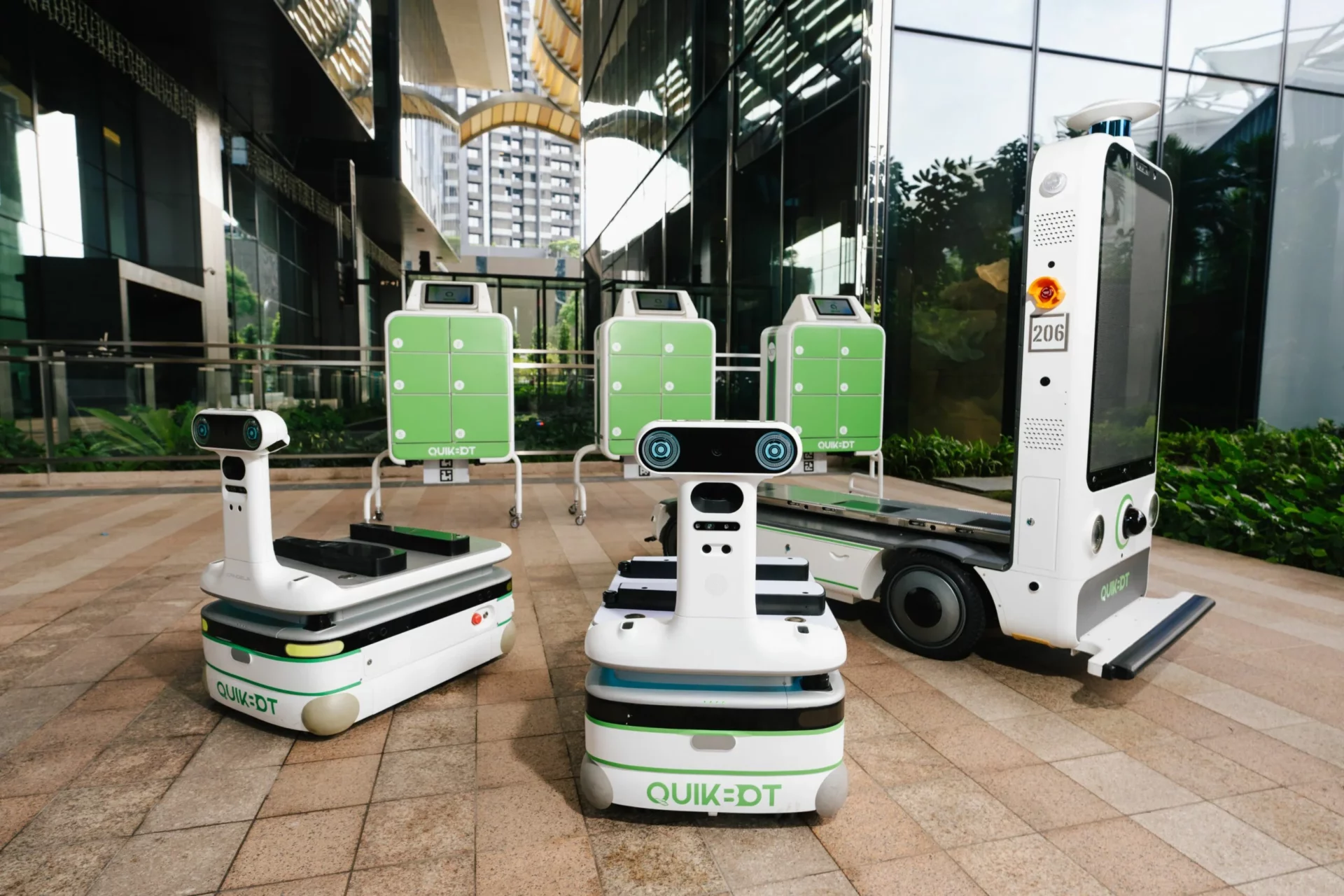
I had the pleasure of reconnecting with my colleague from QuikBot, whose robotic platform is being developed around a broader smart city vision. Their robots are already operating as autonomous couriers in office buildings and hospitals, where they help to transport medicines and supplies. We enjoy discussing factory use cases. It was a good reminder that many of the technologies discussed at AI conferences are now a reality. They are already being used in real environments to solve practical operational challenges every day.
The view from Birmingham: what manufacturers actually struggle with
SuperAI 2026 showed the cutting edge. A few days earlier, at Smart Manufacturing Week in Birmingham, the mood was different: grounded, sometimes frustrated, and very honest about what the middle market of manufacturing actually experiences.
Four themes came up repeatedly across panels and conversations:
- Change management remains the primary obstacle to any technology implementation, including AI. The tools can be ready; the organization often is not.
- Energy costs are rising fast enough to override other priorities. Production decisions are being made on energy grounds that no AI scheduling tool has yet solved cleanly.
- Supply chain disruptions continue to require human adaptation that automated systems cannot fully absorb.
- Pressure to use AI for problems that do not need AI is creating real waste. Manufacturers confirmed that the challenge is not tool availability; it is knowing which problems AI should actually touch.
One observation deserves separate attention. Middle-level production managers feel pressure from both directions: from above to digitalize and implement AI, from below to keep production running. This creates a specific kind of stress that no technology roadmap resolves. The best tools in the world do not help if the person responsible for deploying them is already overloaded.
The AI conversation at SuperAI 2026 and the operational reality on most factory floors are moving at very different speeds.
Bridging that gap is the actual work. Not selecting the next platform, but understanding where AI creates genuine value on a specific factory floor, with specific people, in a specific context. Manufacturers in Birmingham were clear: they are not looking for the vendor with the highest version number or best features. They are looking for partners with domain expertise who understand what production management actually involves.
This is consistent with what we hear at Nexelem from our own clients. The value is not in the tool alone; it is in the combination of the tool and the understanding of what needs to be solved. If you are thinking through where AI fits in your production management setup, we are happy to compare notes.
One more angle worth noting, particularly for manufacturing companies that also develop their own software. The AI transformation is not limited to production operations; it is reshaping how software is built. Organizations accustomed to traditional development cycles are finding that agentic AI changes the cadence, the tooling, and the review process at every step. VirtusLab addresses this through Visdom, an AI-native software development platform that helps organizations adapt their development processes to a world of AI agents, including a self-audit maturity matrix for teams that want an honest picture of where they actually stand.
F.A.Q. about SuperAI 2026 and manufacturing AI
Written by