Digital Kanban: Moving from Physical Cards to Electronic Pull Systems

For decades, the physical Kanban card has been the heartbeat of Lean Manufacturing. It is simple, visual, and effective. When a bin is empty, the operator sends the card upstream to signal, “Make more.”
But as factories embrace Industry 4.0, the limitations of physical paper and plastic become clear. Cards get lost. They get dirty. And most importantly, a physical card cannot tell you trends over time.
The evolution of the pull system is here: Digital Kanban (or e-Kanban). It retains the visual simplicity of the original method but supercharges it with the connectivity of modern software.
E-Kanban Meaning and Evolution
To understand e-kanban’s meaning, think of it as a digital twin of the card system. Instead of a physical card moving from a bin to a board, a signal is triggered electronically, via a barcode scan, a button press, or an automatic sensor.
An e-kanban system replaces the manual movement of cards with instant information flow. When an operator at the assembly line consumes a box of parts, the warehouse or the previous machine knows immediately, not 20 minutes later when someone walks the card over.
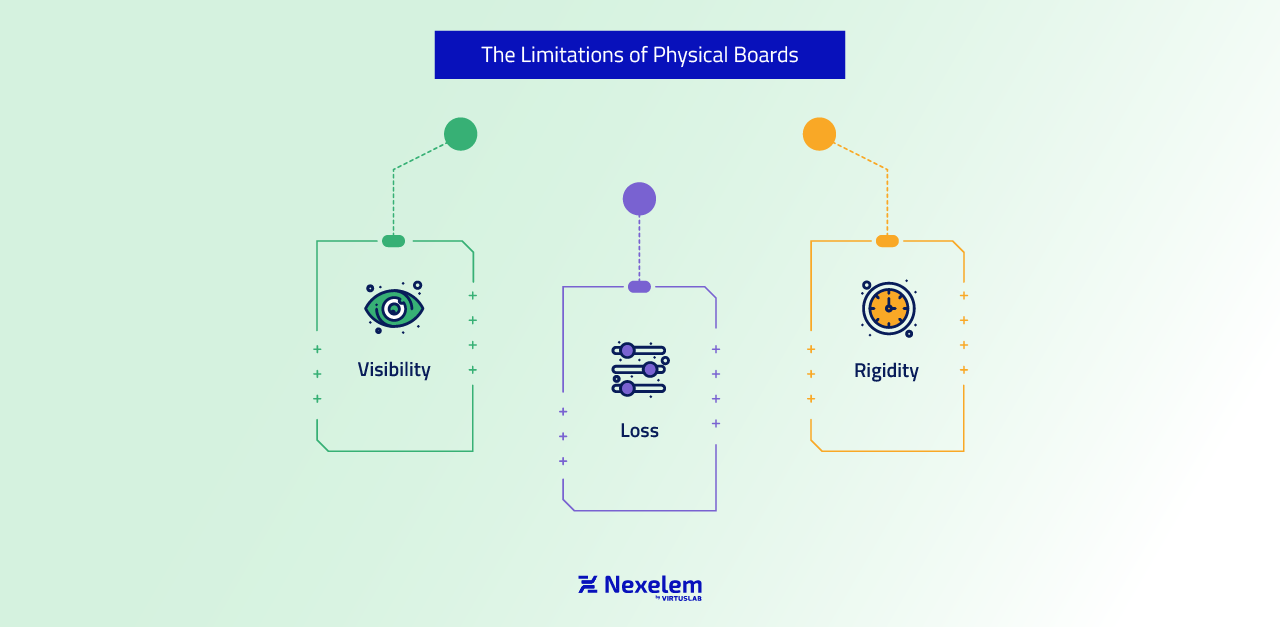
The Limitations of Physical Boards
Physical Kanban boards are great for the people standing in front of them. They are useless for everyone else.
- Visibility: The office procurement manager cannot see the board on the shop floor.
- Loss: Cards often end up in pockets or sweepings, breaking the replenishment loop.
- Rigidity: Resizing a “supermarket” or changing buffer levels requires physically re-printing and re-laminating cards.
Bridging the Gap: Automated Supply Chain Integration
The power of e-Kanban extends beyond the factory walls. With physical cards, the process usually stops at the loading dock. A digital system can automate external procurement.
When a raw material bin reaches a critical low level, the e-Kanban system can automatically trigger a purchase requisition or send an order directly to the supplier’s system. This eliminates the “gap of silence” between the shop floor running out of stock and the purchasing department placing an order.
This integration significantly reduces lead times and prevents the “bullwhip effect,” in which small fluctuations in demand lead to massive overreactions in ordering. It ensures that your MRP System is driven by actual consumption, not just theoretical forecasts.
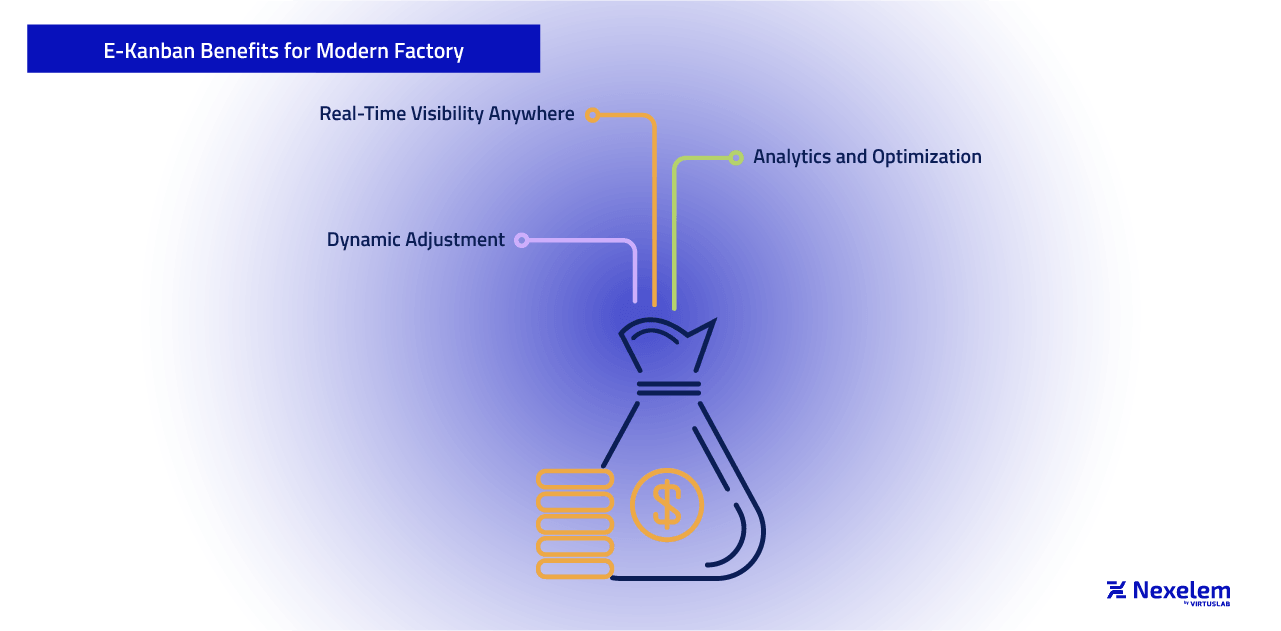
E-Kanban Benefits for the Modern Factory
Implementing a digital solution brings transformative e-kanban benefits:
1. Real-Time Visibility Anywhere
With Nexelem’s Kanban View, the status of every loop is visible on any screen. A manager can check the flow of materials from their office, from home, or from a different plant.
2. Dynamic Adjustment
In a physical system, changing the number of cards (to adjust for seasonality) is a chore. In an e-Kanban system, you can adapt buffer levels with a few clicks. If demand spikes, you can instantly inject more “digital cards” into the loop to prevent stockouts.
3. Analytics and Optimization
A physical card has no memory. It cannot tell you that “Part A” consistently runs out on Tuesdays. Digital Kanban records every cycle. It generates data that helps you optimize inventory levels, reducing capital tied up in stock while ensuring OTIF (On-Time In-Full) delivery.
Implementing Digital Pull with Nexelem
Transitioning to e-Kanban does not mean abandoning the visual nature of Lean. Nexelem’s interface is designed to mimic the intuitive layout of a physical board.
Columns represent status (To Do, In Progress, Done), and cards represent orders. Users can drag and drop items on touchscreens, maintaining the tactile feel while updating the central database instantly.
It is time to remove the “waste” from your Lean tools. Stop chasing lost cards and start tracking flow, seamlessly combining your digital Kanban with a clear production schedule Gantt chart for ultimate operational control.
Ready to modernize your production flow? Explore the interactive Kanban View in Nexelem and see how digital pull systems drive efficiency.